Companies that don't keep their promises are guilty of purpose washing and open the door to sanctions. When a company sets out to define defining its raison d'être or communicating on its CSRactions, it is important to take into account the pitfalls and mistakes to be avoided.
We could define purpose washing as the practice whereby a company communicates a CSR commitment without taking any action to reflect it. An empty promise, far removed from operational reality.

Contents
Purpose washing can be born of the best intentions
Companies increasingly committed to responsible transformation
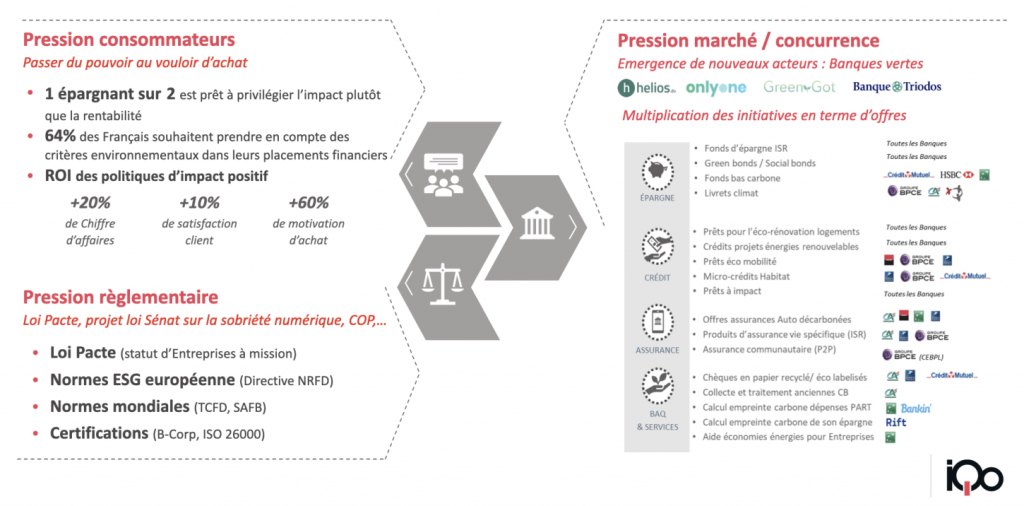
This injunction to meaning and sustainability is becoming a global performance issue for the company. In fact, a veritable race to the finish has begun to meet the demands of the market, regulators, consumers and, more broadly, stakeholders.
Purpose washing and name and shame
Visit labels, standards and other mechanisms are multiplying, with a key challenge for France: to influence the standardization of practices and the construction of new standards for a new form of impact and responsible capitalism (NFRD Directive, etc.).
However, public awareness of these issues is growing, and disembodied initiatives are often the subject of "purpose washing" and " name and shame " campaigns, pointing up the difficulties faced by companies and their managers in reconciling performance with the credibility of their commitments.
The Oxfam France report ("Climate: CAC degrees too much) or the controversy following Total's announcement that it would ask shareholders to vote on its climate plan and green diversification strategy (as well as its proposed name change to "TotalEnergies") at the Annual General Meeting on May 28, 2021, illustrate this increased pressure on companies.
Reputational and legal risks of purpose washing
In the past, controversy and reputational issues were usually settled by the media and experts. Today, the tone is no longer one of moral disapproval and reputational risk. Real legal risks exist, and need to be taken into account by managers when defining and implementing their global strategy and business model.
The responsibility of the company and its directors in the event of greenwashing or purpose washing can be incurred on at least four legal grounds (civil law, consumer law, capital markets law and competition law).
The indictment of Butagaz for its advertising "1 bottle bought = 1 gesture for the planet - My bottle is 100% carbon offset..." in March 2021 or, more broadly, the European Commission's "Clean Sweep" operation last January (which identified nearly 350 allegations from companies claiming to sell environmentally-friendly products on the Internet) underline the public authorities' determination to act more firmly against greenwashing and purpose washing.
How can you limit the risks of purpose washing?
- So how can we limit the risks associated with the proliferation of scattered and sometimes inconsistent initiatives?
- How can we manage and organize risk within the company without hampering the overall transformation strategy?
- How can we avoid discouraging companies and turning greenwashing into a deterrent to corporate social commitment and transformation?
Liability under civil law
The company's liability may be sought on the basis of ordinary civil liability law, which applies when fault, damage and a causal link between the two are proven.
In addition, specific texts laying down social and environmental obligations refer to this common law regime.
By way of example, failure to comply with the obligations set out in the law on due diligence gives rise to liability on the part of the perpetrator, who is obliged to compensate for the damage that could have been avoided if these obligations had been fulfilled. Total and Casino are being sued by several associations and NGOs on this basis.
In addition, since the law on the reconquest of biodiversity of August 8, 2016, a specific civil liability regime applies to ecological damage. Articles 1246 et seq. of the Civil Code recognize the notion of ecological damage and provide a framework for compensation, which must be paid in kind as a priority.
Liability under consumer law
Consumer law provisions have also made it possible to penalize alleged commitments to social and environmental responsibility, and environmental claims that are misleading or likely to mislead consumers.
The offence of deception, misleading advertising or misleading commercial practices has been upheld by various courts in such situations.
- For example, the offence of deception was upheld in the case of a sale labelled as organically grown wheat, harvested from plots treated with a strictly forbidden weedkiller.
- The offence of misleading commercial practices also made it possible to punish Monsanto's use in an advertisement of a bird associated with the terms "environmentally friendly", "effective and safe for the environment" or "biodegradable" for a product that did not meet these characteristics.
- The failure of a French company (a subsidiary of the foreign group Samsung) to comply with ethical commitments published on its website was also prosecuted under the heading of misleading commercial practices for acts committed abroad (China, South Korea and Vietnam) which did not respect these commitments.
Liability under financial market law
When the company is listed, "the information given to the public by the issuer must be accurate, precise and sincere", in accordance with Article 223-1 of the AMF's General Regulations. These principles apply to ongoing information disseminated by the issuer and, unless otherwise stipulated, also to periodic information.
Communicating erroneous non-financial information to the market could constitute an offence of false or misleading information, in accordance with the provisions of article L. 465-3-2 of the French Monetary and Financial Code.
To date, the AMF and French courts have not handed down any sanctions relating to financial or non-financial information on climate issues.
Liability for unfair competition
Competition law (unfair competition) could also be used as a basis for seeking the liability of companies that fail to respect their social or environmental commitments.
Compliance with CSR commitments commitments can give a company a competitive edge, not least by enhancing its reputation. A company that respects the rules would face unfair competition from companies that do not respect their obligations in this area.
In a case pitting Revival (Derichebourg Environnement) against Etablissements L Marchetto, the French Supreme Court26 accepted, for example, that the latter's failure to comply with environmental legislation could be analyzed as an act of unfair competition against Revival, which had undertaken to comply with these rules.
Faced with the expectations expressed by civil society and increased pressure from consumers and shareholders on CSR issues, European and national legislators and regulators have mobilized strongly. The legal bases currently available to sanction companies that practice greenwashing and purpose washing are likely to increase as the regulatory framework applicable to this subject continues to develop and expand.
3 key principles to avoid purpose washing
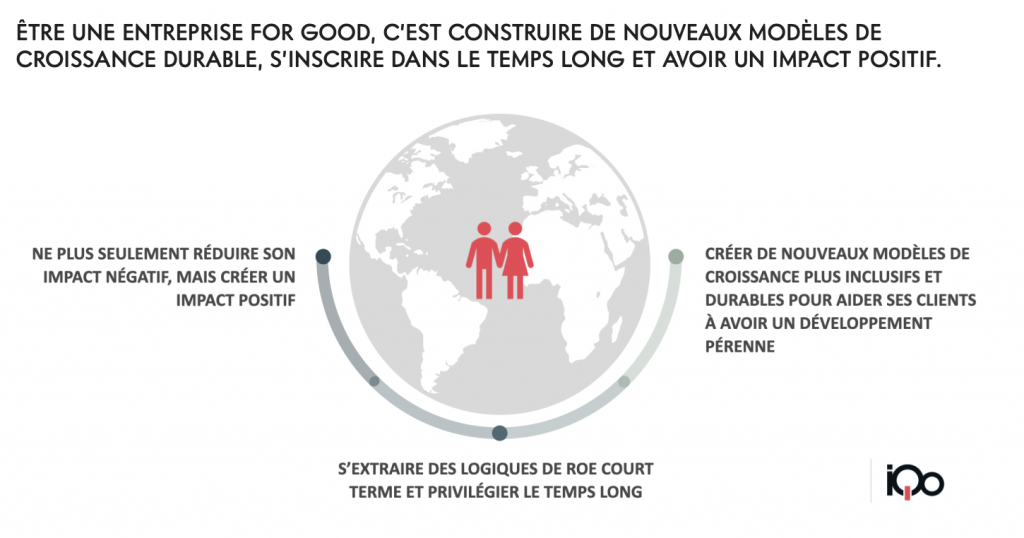
Finally, there are three key principles to avoid the risk of purpose washing.
- No longer just thinking about reducing our negative impact, but rather asking how we can create a positive impact.
- Move away from a short-term, return-on-investment approach to a long-term approach.
- Creating new, more inclusive and sustainable growth models. Logic must integrate customers to have a global and sustainable impact.

Laura PERRES-GANNÉ
iQo Associate
her LinkedIn profile

Guillaume TEBOUL
iQo Partner
LinkedIn