
Data For Good

If we had to give a simple definition of Data For Good, it's the contribution of data science as a lever for innovation for good for society and business.

The Data For Good "Data For Good (a community of volunteer data scientists, developers and designers) brings together a wide range of players who want to respond to societal challenges in a concrete way.

At iQo, we place Data at the heart of our consulting and support model. Indeed, to support the positive transformation of companies, relying on Data will enable us to better meet the challenges of general interest and sustainable development.

Opening up and reusing data for the public good

Contents

Faced with the permanent injunction to accelerate the opening up of data and its reuse to cover ever more uses and create ever more new intelligent technologies, we at iQo are convinced that we must :

  1. Focus on essential uses, i.e. those that meet the needs of the greatest number of users
  2. Ensuring that innovations are accessible to all through support for digital autonomy
  3. Put an end to price disincentives, so that improvements in daily life and quality of life do not depend on individual financial capabilities.


Open data, as part of a Data for Good approach, represents a powerful tool for serving the general interest, promoting sustainable development and improving the daily lives of citizens.

A few examples of Data for good applications

The information made available to them now enables them to make increasingly well-informed choices. A number of players have taken the initiative to provide access to data in various fields.

  • The Yuka application lets you compare consumer products to help you make Procurement more sustainable choices.
  • NumAlim, which we describe in detail in this article: NumAlim or how to make nutritional information more transparent
  • Citymapper rationalizes travel by allowing you to compare different modes of transport.
  • Applications such as myCO2 and Ecolab enable consumers to calculate their carbon footprint.

Data for good in healthcare and science

In healthcare, the proliferation of available data has led to numerous medical advances. For example, the targeted sequencing of certain genes now makes it possible to predict the most effective treatments for patients, while avoiding side effects.

It's not just medical research that has been impacted by Big Data and data sharing. The "World Bee" project, for example, processes several billion lines of data and uses deep learning techniques to observe their behavior and provide scientists with a basis for analysis.

Open Data to make data accessible to businesses

Beyond the opening up of public data, communities and gatherings are emerging to ensure that companies make the data they collect available to the community, while guaranteeing the anonymity of the individuals concerned.

The first companies to adopt this approach are those that interact with the public sector, such as SCNF and La Poste.

In addition to meeting legal and regulatory obligations (for example, the obligation to publish extra-financial performance for companies with over 500 employees), opening up corporate data represents several advantages:

  • transparency for customers and thus boost their confidence
  • experimentation and identification of new uses for the company by external experts


This is the gamble Engie has taken by opening up the data from the Haute Borne wind farm in the Meuse region of France.

The "Data For Good" association (a community of volunteer data scientists, developers and designers) brings together a wide range of players keen to respond to societal challenges in a concrete way. It recognizes data science as a powerful lever for innovation, which should be made available to NGOs in the same way as to digital giants.

The OPAL project , financed by the AFD, collected telephone data from inhabitants of developing countries in order to establish reliable socio-economic indicators and meet the needs of populations in terms of education, health and transport. By financing the OPAL project, AFD wanted to demonstrate that secure and ethical use of data from private companies was possible, and that it could serve the cause of sustainable development.

What is the real impact of Data for good?

Despite these positive externalities, it remains difficult to measure the real impact of Big Data on societal objectives and quality of life. For example, in terms of mobility, and depending on the different scenarios envisaged, the automation of means of transport (autonomous cars) could just as easily halve or, on the contrary, double energy consumption.

What's more, technological and data For Good projects must take into account usage, development and production costs.

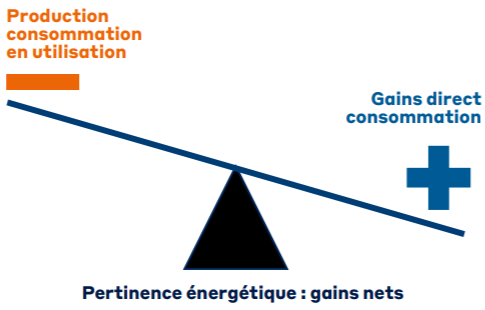
According to the Shift Project's report on "Deploying digital sobriety", the relevance of connected technologies needs to be given greater consideration before deployment.

This relevance consists of

  • technology costs (particularly energy and resource consumption),
  • their real contribution compared to non-connected technologies
  • the indirect effects of their deployment (maintenance requirements, need for new infrastructure, etc.).
iqo cabinet conseil energie

However, the relevance of a technology should not be presupposed according to general rules, but assessed for each type of operational case.

Shall we talk about it together?

If you'd like to find out more about our expertise and discuss these topics with us, please don't hesitate to contact us!

Also read about customer experience

Also read about data