Customer Relations Consulting

Customer Relations Consulting Firm
Today, customer relations are at the heart of a brand’s promise. It is no longer limited to handling incoming requests: it builds trust, influences satisfaction, drives loyalty, and has a direct impact on both costs and value creation.
In an environment marked by increasingly high expectations, a proliferation of channels, and the rise of artificial intelligence, companies must rethink their customer relationship models to balance customer experience, operational efficiency, accessibility, personalization, and economic sustainability.
Customer relationship consulting specifically helps align vision, customer journey, organization, management systems, contact centers, and technologies to build a relationship that is valuable to customers, sustainable for teams, and effective for the company.



Key Challenges in Customer Relations
Rethinking Customer Relationships in an Omnichannel, Instant-Grind World
Customers expect a prompt, consistent, and context-sensitive response, regardless of the channel used. The challenge is no longer simply to be reachable, but to ensure continuity of service across phone, email, messaging apps, digital platforms, and human interactions.
Improving Contact Center Performance Without Compromising the Customer Experience
The customer service centers face intense pressure regarding costs, volume, response times, and perceived quality. Organizations must therefore strike a more careful balance between automation, staffing levels, service quality, agent productivity, and the value delivered to the customer.
Leveraging AI to Enhance Customer Relationships
Artificial Intelligence in Customer Relations opens up new avenues for better routing of requests, assisting customer service representatives, automating certain contact reasons, analyzing customer feedback, and enhancing voice and digital interactions. However, its impact depends on the quality of its implementation, its integration into processes, and the right balance between technological efficiency and relationship-based trust.
Reduce customer effort and avoidable interactions
A significant portion of contact volumes still stems from friction points in the customer journey, a lack of clarity, insufficient information, or incomplete resolution during the initial interaction. The challenge is to address the root causes—not just the symptoms—to simultaneously improve satisfaction, productivity, and cost efficiency.
Adapting organizations and skills to keep pace with new practices
Transforming customer relationships does not rely solely on new tools. It also requires changes in roles, skills, management, metrics, and governance to enable teams to sustainably integrate AI, omnichannel capabilities, and a stronger focus on customer value.
29 %
98 %
83 %
Why Is It Time to Revamp Your Customer Experience?
A CUSTOMER RELATIONSHIP STILL DESIGNED AROUND CHANNELS RATHER THAN CUSTOMER GOALS
CONTACT CENTERS ARE OFTEN MANAGED UNDER PRESSURE RATHER THAN AS A STRATEGIC ASSET
AUTOMATION THAT IS SOMETIMES IMPLEMENTED WITHOUT PROCESS TRANSFORMATION
A CHALLENGE IN LINKING OPERATIONAL PERFORMANCE AND CUSTOMER FEEDBACK
TEAMS LACKING ADEQUATE SUPPORT IN THE FACE OF THE RISE OF AI
Our Approach to "
"
Customer Relationship Consulting
Improving the customer journey
- Improving Customer Journeys
Optimize end-to-end customer journeys to reduce customer effort, minimize disruptions, and simultaneously improve satisfaction, reachability, and operational efficiency. - Mapping Customer Journey Paths
Analyze the stages, channels, tipping points, and reasons for reaching out in order to objectively assess the actual experience customers have when they are seeking an answer, assistance, or a solution. - Identifying Avoidable Contacts
Identify the triggers behind unnecessary calls, emails, or follow-ups to address the root causes and sustainably reduce the volume of such communications. - Redesigning Priority Customer Journeys
Rethinking high-stakes customer journeys—onboarding, complaints, claims, assistance, after-sales service, collections, cancellations, etc.—to streamline interactions and improve resolution. - Managing Continuous Improvement
Establish metrics, review processes, and learning cycles to adjust customer journeys over time based on operational data and customer feedback.
EXPERIENCE DESIGN
- Experience Design
Designing simpler, more useful, and more consistent interactions based on customers’ actual behaviors, emotions, and expectations. - User research and field immersion
: Understanding the behaviors, expectations, pain points, and trade-offs of both clients and advisors through observations, interviews, listening sessions, and workshops. - Target Relationship Scenarios
Envision future experiences that incorporate the right levels of autonomy, assistance, and human intervention depending on the situation and the value of human interaction. - Designing Customer Touchpoints
Improve scripts, interfaces, messages, conversations, self-service areas, and contact channels to make the experience clearer and more seamless. - Testing and Experimentation
Rapidly prototype new relational or conversational features to validate decisions before large-scale deployment.
Optimizing Customer Service Centers
- Optimizing Customer Relationship Centers
Transform contact centers by combining operational excellence, service quality, and new automation tools, with a particular focus on the tangible benefits of AI.
Contact Center Performance Assessment: Evaluate the organization, workflows, tools, metrics, staffing levels, reachability, and reasons for follow-up calls to identify priority areas for improvement.- Scaling and Operational Model
Adapt production methods, skills, team organization, and management systems to better accommodate volume fluctuations and improve service quality. - Optimizing First-Contact Resolution
Take action on knowledge, authorizations, processes, scripts, and coordination with other departments to increase “once-and-done” resolutions and reduce the number of follow-up calls. - Thoughtful Integration of AI in Contact Centers
Identifying the most relevant uses of AI—smart routing, agent assistance, automatic summarization, conversational analytics, voicebots, and enhanced quality—while striking the right balance between productivity, quality, and trust.
Defining and Deploying AI Use Cases
- Defining and Deploying AI Use Cases
Identify, prioritize, and deploy artificial intelligence use cases that are truly beneficial to customer relationships, while ensuring their value, feasibility, and adoption. - Identifying Priority Use Cases
Identify use cases where AI can deliver measurable improvements in productivity, response quality, availability, personalization, or interaction analysis. - Feasibility Study and Business Case
Identify the expected benefits, data and IT prerequisites, business impacts, risks, and conditions for success before scaling up. - Design and Testing
Quickly test solutions such as advisory co-pilots, voicebots, reason-classification tools, quality scoring, or verbatim analysis to learn quickly and make adjustments. - Deployment, Governance, and Value Measurement
Support industrialization, governance, escalation policies, monitoring, and impact measurement to ensure the long-term adoption of AI.
Customer-oriented transformation
- Customer-Centric Transformation
Evolving the organization, managerial practices, and decision-making processes to ensure that customer relationships are a permanent consideration in the company’s decision-making. - Organization and Governance of Customer Relations
Clarify responsibilities, cross-functional interfaces, steering committees, and shared priorities to move away from a fragmented approach based on channels or tools. - Customer-Centric Culture and Evolving Approaches
Develop shared principles centered on active listening, empathy, problem-solving, and simplicity to align teams around a common goal in customer relations. - Performance and Quality Management
Evolving KPIs and dashboards to link perceived quality, operational efficiency, economic performance, and business impact. - Change Management
Supporting managers and teams as they adopt new tools, new roles, and new ways of working to make customer relations a shared driver of success.
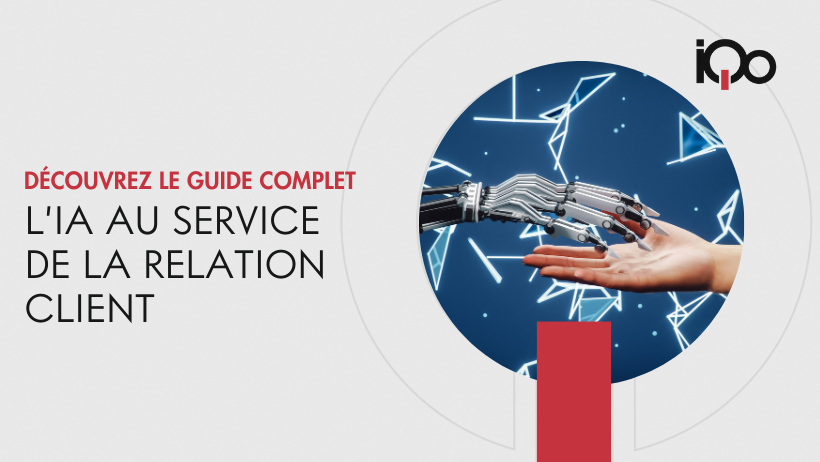
The AI Guide to Customer Relations
AI will profoundly transform the customer experience and greatly improve the efficiency of customer service. But while everyone is talking about it, few have actually taken the plunge.
We conducted an in-depth study to address the key questions that Customer Experience and Customer Relations Directors ask themselves
- use cases
- tools
- REX for Businesses
- tangible gains
- ...
Success stories
Check out our case studies on customer experience consulting projects—
—recently carried out by our teams.
Benchmarking and Analysis of Reachability Within a Major Insurance Group (Health/Life Insurance, Property and Casualty Insurance, Savings)
iQo worked with the Group Marketing Department to develop a strategy to improve reachability:
- Benchmarking Practices and Results in the Insurance Industry
- Defining Standards and Key KPIs
- Analysis of Ways to Improve Reachability
- Strategic Recommendation
Improving a Rail Carrier’s Customer Service Performance Through AI
- Identifying Priority Use Cases to Improve Customer Service Efficiency
- Defining the use cases with the greatest potential (expected benefits, budget, impacts on advisors and clients)
- Support for Operational Deployment
Implementation of a Customer Relationship Management Dashboard for a Leading Insurance Company
iQo worked with the Customer Relations Department to define and implement its multichannel customer relationship management platform
- Defining key customer relationship KPIs across all channels within a customer-centric framework (CES, once & done…)
- Definition of target dashboards and methods for calculating all KPIs
- Support for Implementation
Our Publications on Customer Relations
Our Customer Relations Consulting teams frequently publish articles on
to analyze and interpret key trends.

Remote Customer Service: Building a Truly Effective Operational Model
Companies must structure their customer relationship management in a way that is consistent with their strategy, business objectives, and quality requirements. Defining a target operational model allows for
Managing Peak Activity vs. Managing Crises: Challenges, Methods, and Best Practices for Customer Service Centers
Customer service centers may face various types of operational pressures: anticipated spikes in demand (calls, etc.) based on predictable cycles, as well as sudden crises.
Once & Done (FRC): Definitions and Calculation Methods for a Key Customer Experience KPI
FRC—First Contact Resolution, or “once & done”—is a widely used metric in customer relationship management systems. It aims to
Remote Customer Service: Understanding and Reducing Costs
Learn how to analyze the cost structure of a remote customer relationship management system and identify the key operational levers for optimizing its variable costs. Summary: Reducing the
How can iQo support you?
iQo is a strategy and transformation consulting firm whose mission is to “unleash collective genius to co-create desirable futures.”
- Our firm offers a unique approach to co-construction with our customers.
- We advocate for the integration of skills and expertise, with a particular focus on AI and Impact at the heart of our approach.
- We offer small, agile teams that are genuinely committed to working alongside you, acting as an extension of your own teams.
- We are "makers" and offer practical, results-oriented solutions tailored to your specific
needs. - We are committed: iQo is a mission-driven company that is Ecovadis Gold, ISO 9001, and ISO 14001 certified.