

How can we improve the relationship and performance between central management and its local units?

While all directors of Central Divisions and Business Units at headquarters are considering how to improve their relationships with local entities and subsidiaries, few are asking themselves how they are positioned in relation to these entities. Is this the right positioning today, in my context, to support the performance of the local entities and the group?
customer relations

Summary

Finding the right balance for a central management team in its relationship with local entities—between support, expertise, guidance, and oversight—is difficult, yet it is a key driver of performance for both subsidiaries and the group, one that is too often overlooked in favor of purely relational considerations. This stance results from structural factors (the group’s history, business model, and local performance) but can be adjusted by leveraging concrete measures: scope of operations, industry coordination, performance management, and process governance.

Finding the right balance is the first step to take in order to sustainably improve central-local relations and, ultimately, everyone’s performance.

Contents

It is never easy for central management to determine the right approach toward its local operational units, given the complex balance between support, challenge, direction, and oversight.

In reality, most central administrations are adrift. Either they micromanage—and local entities circumvent their authority, resist, or become demotivated—or they position themselves as mere “service providers” but struggle to gain recognition. A balance is rarely achieved and even more rarely sustained over time.

Four perspectives, not a single right answer

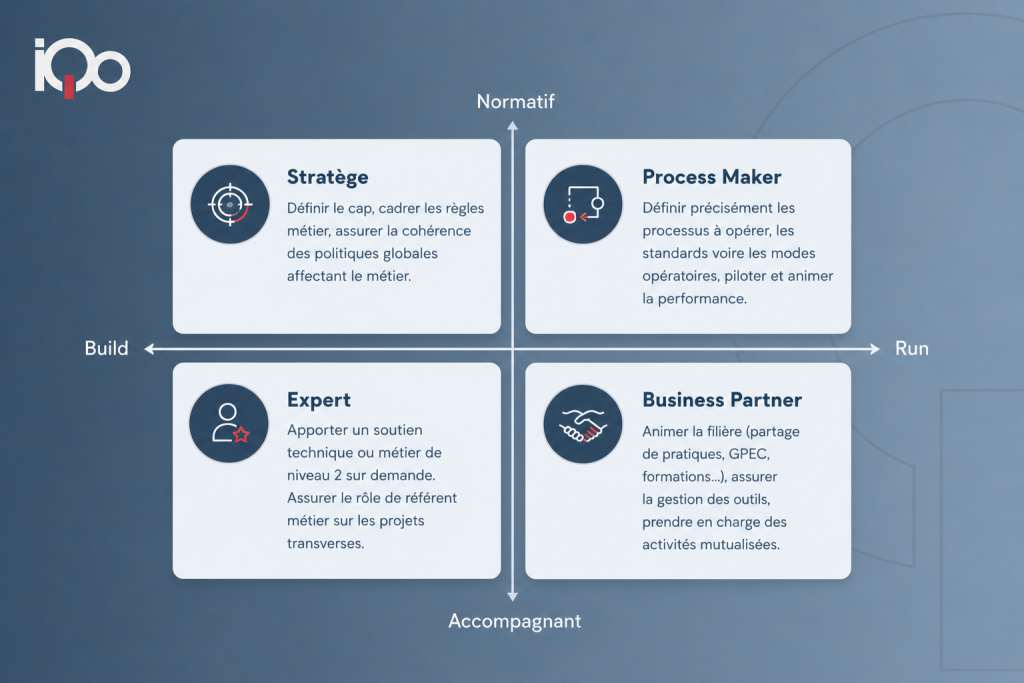
There are four main approaches to central management. These four approaches are generally structured along two axes: one related to the level of standards and the other to the “build vs. run” distinction.

marketing and positioning consulting firm, headquartered in Paris

The approach of a central leadership is never monolithic and will not be limited to a single stance. It will always involve a combination of these four main modes of intervention in varying proportions.

Furthermore, this positioning is never set in stone: it can—and indeed must—evolve in response to changing challenges or periods of transformation.

What Really Influences Your Ranking

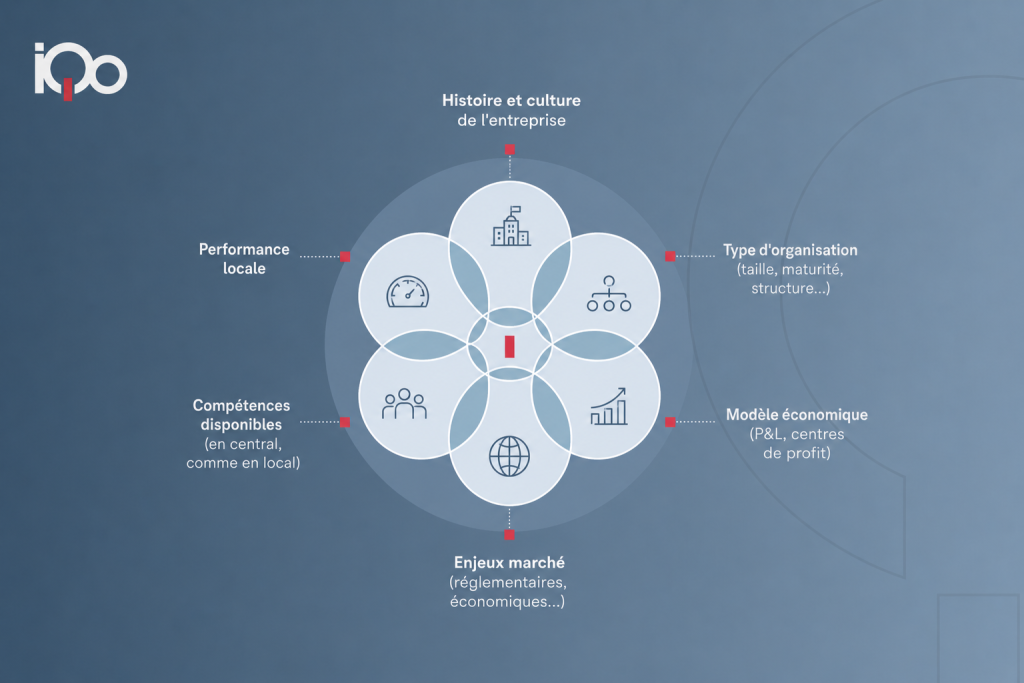
The positioning of a central management team is often the result of internal and external factors.

The Group’s history (organic growth or growth through acquisitions), its business model (which drives the P&L?), the performance of local entities (whether they are underperforming or not), the actual skill set at headquarters, and current regulatory issues directly influence the positioning of corporate management.

Ways to move the cursor

Positioning is not set in stone. It requires concrete effort across several dimensions:

3 Types of Central Management


's "Strategist" Central Division

A central “Strategy” department will have fairly sporadic interactions with the various units and little presence on the ground.


's "Process Maker" Central Division

A central “Process Maker” division will have a close-knit governance structure, a results-oriented approach, and will track performance and resource metrics.


"Expert" Central Division

A central “Expert” department will step in upon request to provide Level 2 technical or business support and will serve as a cross-functional point of contact for issues requiring specific expertise.

If communication between headquarters and local offices isn't going smoothly, or if you feel that the strategy needs to change but aren't sure exactly how, contact us to learn more and benefit from our practical insights on this topic.

beatrice torre marketing customer experience

Béatrice TORRE

Client Engagement Partner

Marketing Strategy Consulting

We help marketing teams better understand their customers, anticipate their behavior, and accelerate their transformation. By combining strategy, data, AI, and service design, we turn insights into results.

Frequently Asked Questions

Tensions between central and local levels most often arise from a disconnect between the central leadership’s actual stance and the expectations of operational units. A central management team that micromanages leads to circumvention and resistance; a central management team that is too hands-off loses its legitimacy and perceived added value. This imbalance develops gradually, often without anyone having decided to create it: it results from changes in structure, economic performance, scope, or expertise on one side or the other.
Several structural factors shape this positioning: the group’s history (organic growth or growth through acquisitions), the business model and the question of who is responsible for the P&L, the performance level of local entities, the skills actually available at headquarters, and current regulatory or transformation challenges. This is why this positioning must be reviewed regularly, rather than set in stone once and for all.

There are four main levers that can be used to shift the balance:

  • the scope of activities handled (what remains at the central level versus what is delegated to the local level);
  • the methods used to coordinate the program (level of collaborative planning, on-site presence);
  • performance management (outcome indicators versus input indicators);
  • and process governance (which defines standards, determines the level of detail, and ensures compliance). These levers work in tandem and must be consistent with one another for the repositioning to be credible in the eyes of local entities.
Several warning signs should be cause for concern: recurring tensions between central and local teams; units that bypass central management to deal directly with senior leadership; joint projects that stall for no clear reason; difficulty demonstrating the added value of the central office; or high turnover among central teams. These symptoms rarely indicate a problem with the people involved—they most often signal a structural alignment issue that relational tools alone will not be enough to resolve.