



Supply chain and operations: how to get the most out of your production facilities?

In an economic context marked by increased competition and ever more demanding customer expectations, the full exploitation of production capacity is a strategic performance lever for many companies.

This article provides an overview of best practices for managing production tools, taking into account the constraints associated with their integration into an operational value chain: the ... supply chain.

production tool supply chain

Contents

1. Manage production capacity data over the lifecycle of structures

Knowledge of "as-built" production tool capacities (cadence, flow rates, pressure, power, speed, etc.) and the critical equipment that limits them is the basis for reliable operational and commercial planning.

It enables procurement, production, sales and logistics managers ( supply chain) to align production tool capacities with company objectives. It prevents overloads likely to impact on production quality and lead times.

Controlling this critical data involves mastering the following processes (among others):

2. Co-construct visual operating manuals and validate skills acquisition

How many procedures and operating manuals sit unused in cabinets? How many operators are left to their own uncertainties about how to run an industrial production tool?

supply chain production tool

The co-construction of visual and explicit operating manuals on operation conformity criteria, practical training and validation of acquired skills are crucial in mastering industrial capacities.

They promote continuous improvement by providing a basis for anticipating, detecting and analyzing deviations.

3. Make a production tool do ... what it is designed to do ... or modify it

Production tools must offer flexibility: integration of variants, resilience in the face of unusual or temporarily deteriorated production or operating conditions.

However, the use of flexibility is generally synonymous with performance degradation.

Introducing unsuitable products or operating "out-of-range" structures over the long term degrades capacity and drives up processing costs.

By setting up regular "S&OP" sales and production capacity planning committees, we can minimize this risk and anticipate the need to modify either the works, or the range of products or services.

4. Limit configuration or product changes by optimizing scheduling and inventory.

supply chain production tool

Efficient scheduling is vital to limit production changes, which generate downtime and create transient regimes that often lead to breakdowns.

Inventory management plays a key role in the ability to respond flexibly to fluctuations in demand without disrupting production.

5. Make the most of feedback from production tool breakdowns and contract manufacturer assistance.

Right-first-time diagnosis and troubleshooting are essential to maintain production capacity at budgeted levels. Regular analysis of breakdown feedback and its "hands-on" communication to operational teams considerably reduce troubleshooting and return-to-service times.

Companies able to adopt these practices will be better positioned to meet market demands, while optimizing their operational efficiency and competitiveness.

The contractualization of manufacturer assistance and the implementation of a "contract management "This ensures optimum responsiveness in the event of complex breakdowns, and privileged access to spare parts.

6. Mechanize and automate upstream and downstream flows

supply chain production tool

Companies that invest in automation create sustainable competitive advantages in the markets they address.

And 1, and 2, and 3 and 4.0!

Automation offers major levers for optimizing production capacity.

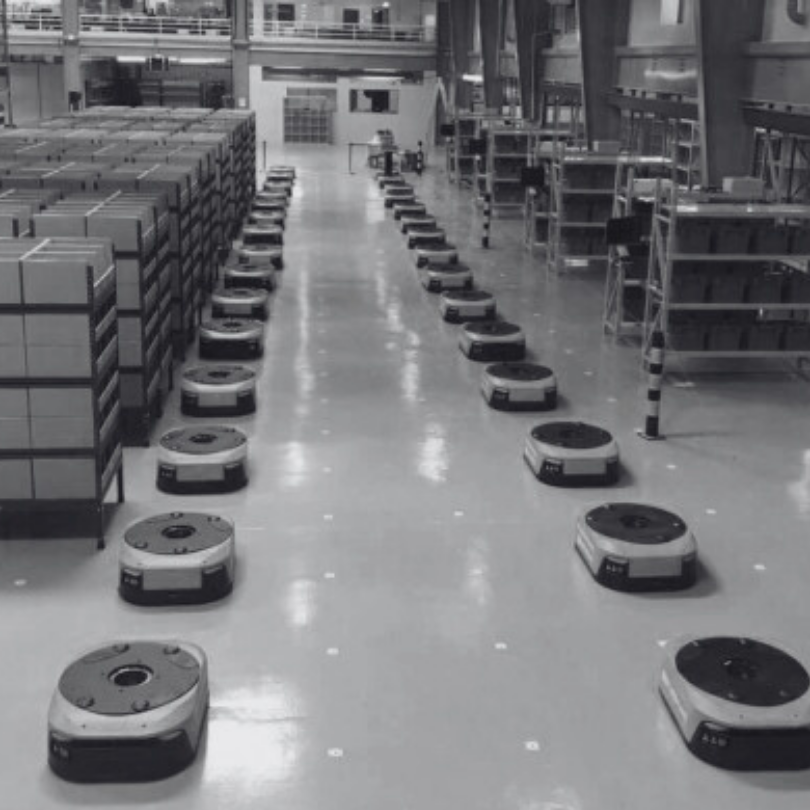
Whenever congestion limits (or is likely to limit) the capacity of an industrial process upstream (raw material supply) or downstream (storage saturation or loading for shipment), automation opens the way to new production perspectives:

Many companies have invested in automation, whether in the world of production (mechanization of warehouses and incoming/outgoing production flows) or industrial maintenance (mechanization of handling flows in workshops and spare parts warehouses).

In conclusion

In conclusion, optimizing the capacity of production tools requires a holistic approach integrating :

Supply Chain & Operations

Discover our expertise to help your company meet these challenges

Antoine LE FLOCH

Senior Manager iQo
his LinkedIn profile