

The efficiency of support functions is a key challenge for retail banks reinforced by the current economic climate. Sustained inflation and rising interest rates are forcing banking institutions to adopt a more cautious approach to their operating costs, and to optimize the efficiency of their operating model.
Support functions account for 1/3 of bank staff
Support functions generally account for more than a third of a retail bank's workforce. These functions have always been optimized to ensure maximum efficiency within organizations. Whether in human resources, accounting, Procurement or customer services, each area has continually sought to optimize its processes and improve performance by :
- adopting new technologies ;
- automating repetitive tasks;
- setting up sophisticated computer systems.
These advances have made it possible to :
- reduce processing times ;
- increase productivity ;
- minimize errors.
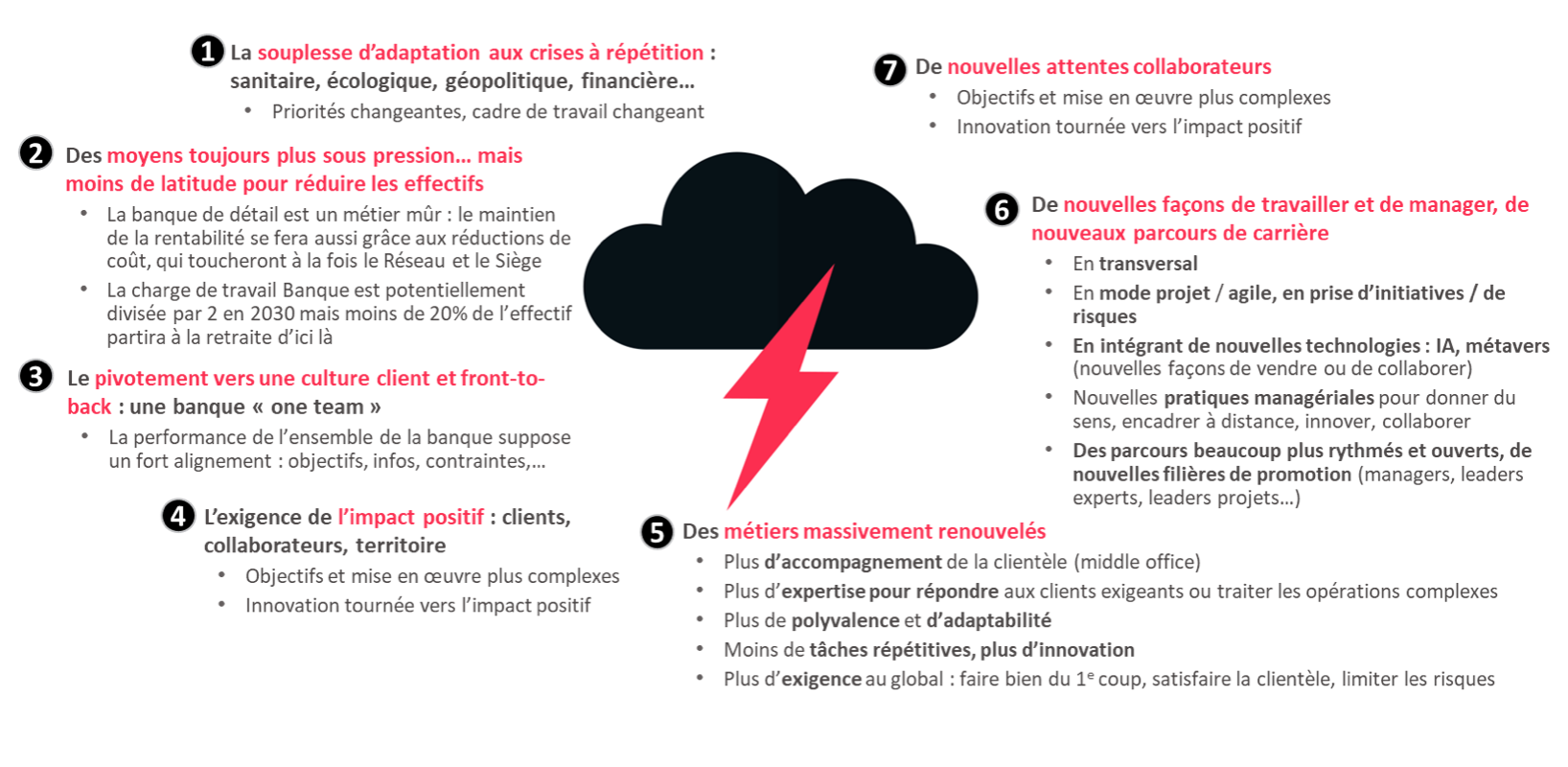
However, these these functions will have to adapt to cope with future developments :
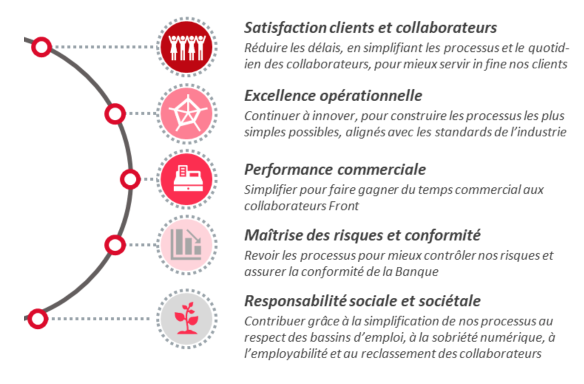
Convinced of the need to make a positive and lasting impact within every organization, we have developed an approach that goes beyond the sole pursuit of operational efficiency, addressing other objectives as well :
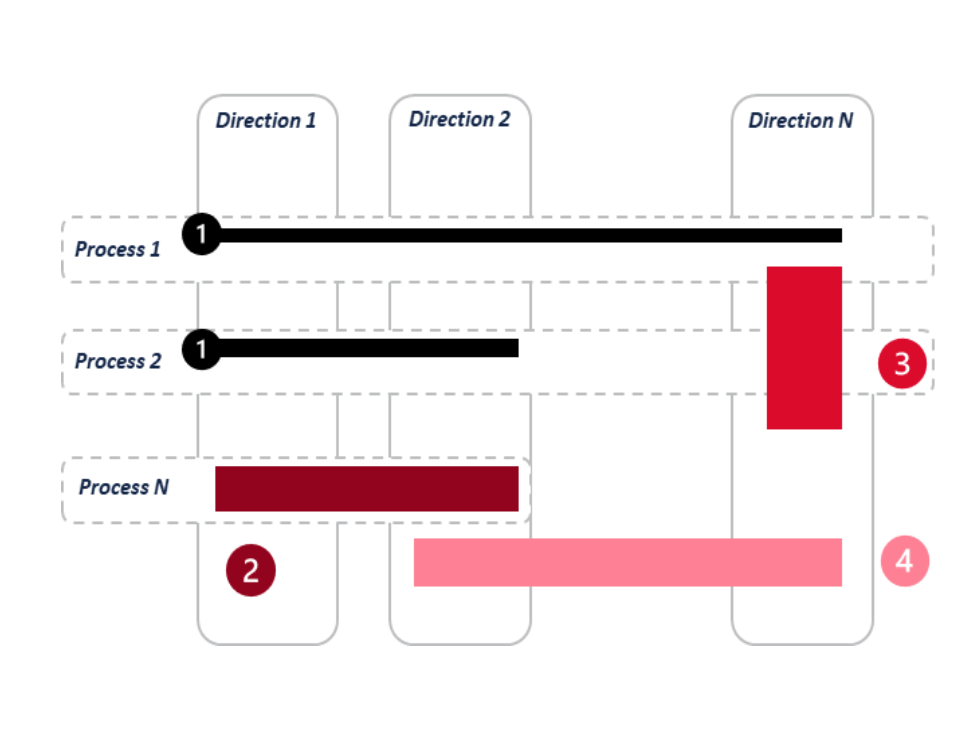
Another distinctive feature of this approach is the desire to target only relevant "pockets" of efficiency, avoiding a systemic approach such as BBZ.
1. Activity common to several departments or even several processes (e.g. network assistance)
2. Process as a whole, which may involve several departments (e.g. risk analysis)
3. Organization of teams within a department, able to intervene in several processes (reduction of managerial layers).
4. Cross-functional themes (e.g. recruitment)
Some illustrations of frequently observed pockets of efficiency
Credit
- Develop alternative operating methodsto absorb peak loads (e.g. offloading headquarters loads to the network).
- Review the offer catalog to simplify network choices and standardize processes
- Integrate checkpoints natively, at the stages followed by the Network, to limit iterations
- Transfer the origination of regulated or complex loans to head office
- Outsource unlocking
Flow
- Use self-care for card-related operations (blocking, stopping, disputing) and invoice the Bank for any operations carried out on the customer's behalf.
- Integrate experts upstream of EDI contractualization and provide them with tools to accelerate and secure parameterization
Estate
- Implement more differentiated processes (according to equipment, type of beneficiary and issues) with a shift-based organization to industrialize processing and improve productivity.
- Systematize activity and productivity management
- Set up dedicated Succession Advisors to manage capital reinvestment
- Automate the processing of simple successions
Recovery
- Review the organization and centralize collections to industrialize the associated activities
- Centralize data to improve the efficiency of debt assignment (litigation)
iQo's specific approach: Process'up© (in French)
Implemented by a large number of companies in a wide variety of sectors over the last 20 years, process approaches have now reached a high level of maturity, and offer a wealth of experience to :
- Choose solutions with proven robustness;
- Set up efficient systems in a context of constrained resources and timing;
- Devote available energy to the success of operational integration, rather than to methodological overthinking.
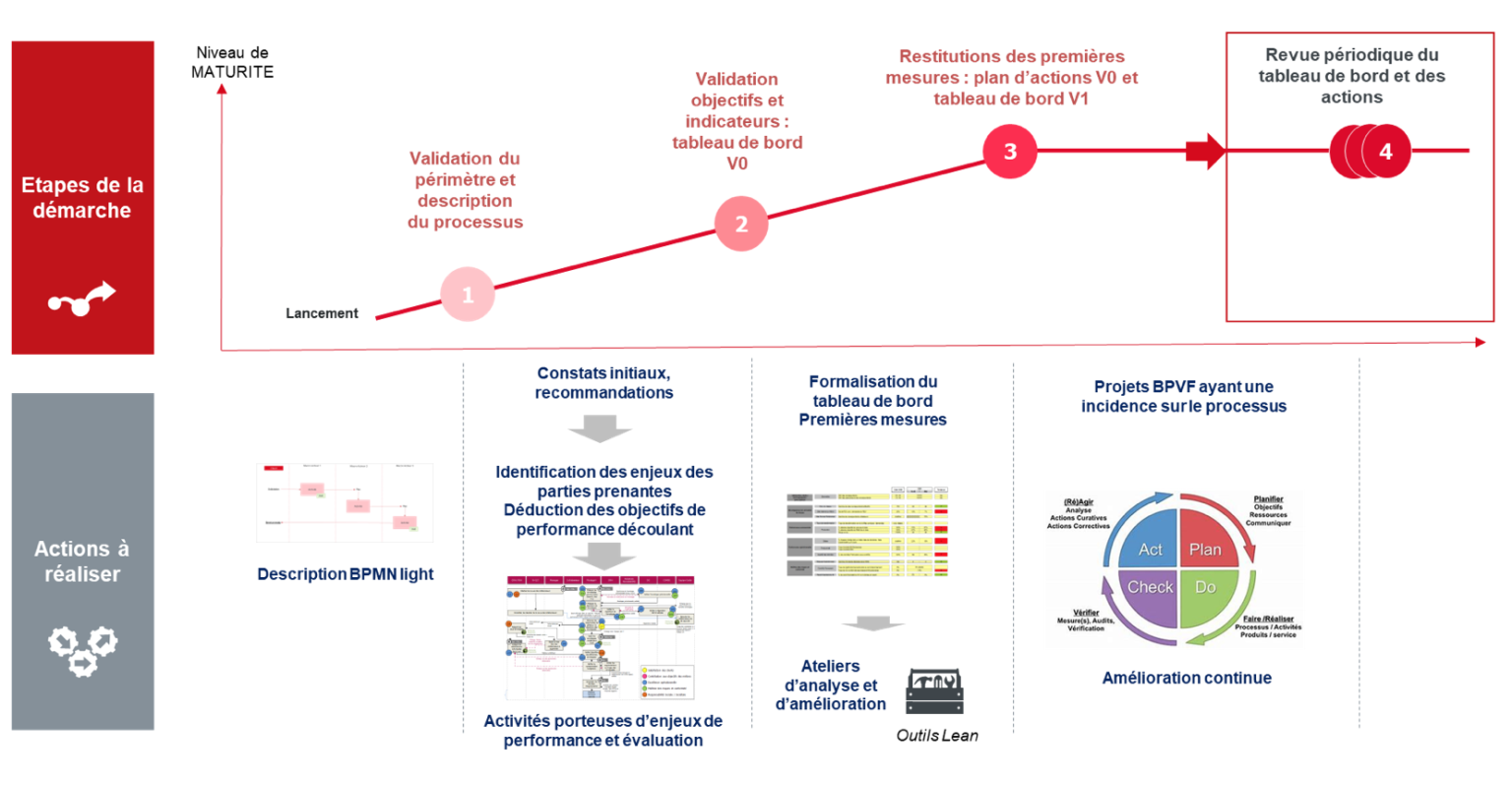
For high-stakes processes, we have developed a specific approach, Process'up©, which mobilizes and develops the skills of our customers' teams as part of a continuous improvement process.
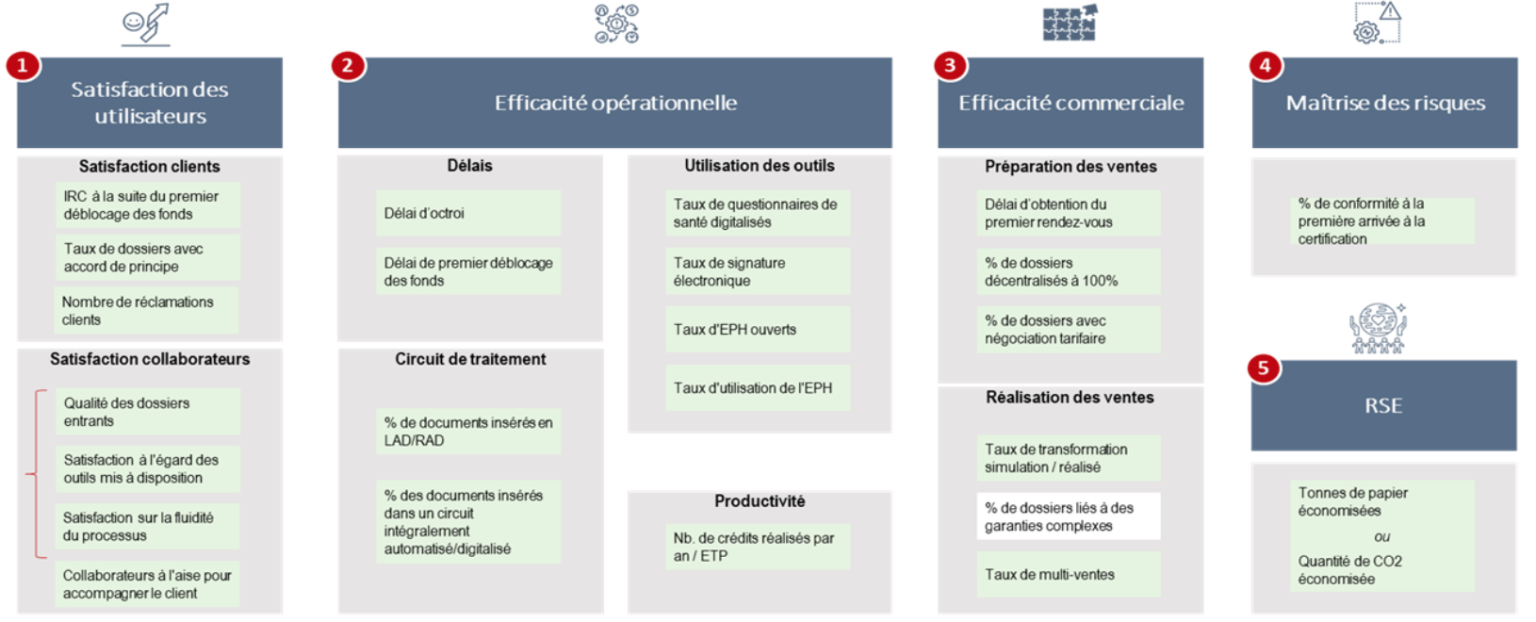
This approach makes it possible to draw up a map validated by all the stakeholders and to set objectives shared by all the departments involved, in the following areas:
- Customer satisfaction
- Operational efficiency
- Sales effectiveness
- Risk management
- Corporate Social Responsibility (CSR)
Establishing a detailed action plan and a steering "cockpit" are prerequisites for initiating periodic reviews and putting the process under steering.
Key success factors and Process'up© implementation
We have identified three key success factors for our operational efficiency projects.
Data
The data plays an essential role in decision-making and management
Put the data teams at the heart of the project to steer the trajectory of gains and value creation, and trigger concrete achievements.
RH
Achieving gains is as complex as identifying them, and requires tight management from the design stage right through to implementation.
Ensure that headcount decreases over time: mobility is often necessary, expected retirements must occur, and recruitment or temporary staff must be monitored to ensure that they do not compensate for departures.
Employees
Employee buy-in is essential.
Encourage employees to trust and take responsibility for GAINS' methodologies and achievements, and then challenge them to make them sustainable.
Further information

How should banks support AgriTech financing?
Banks have a key role to play in supporting the financing of AgriTech in France. French agriculture as a whole is faced with a number of challenges

The 7 challenges of retail banking
1. Get through the crisis and work on long-term strategy 2. Embodying its raison d'être, based on "Positive Impact" 3. Renewing the revenue and operating model

Banks face up to their positive impact transformation
Find out why banks need to step up their "Positive Impact" initiatives. Consuming ethically has become a widely shared concern for many people.