
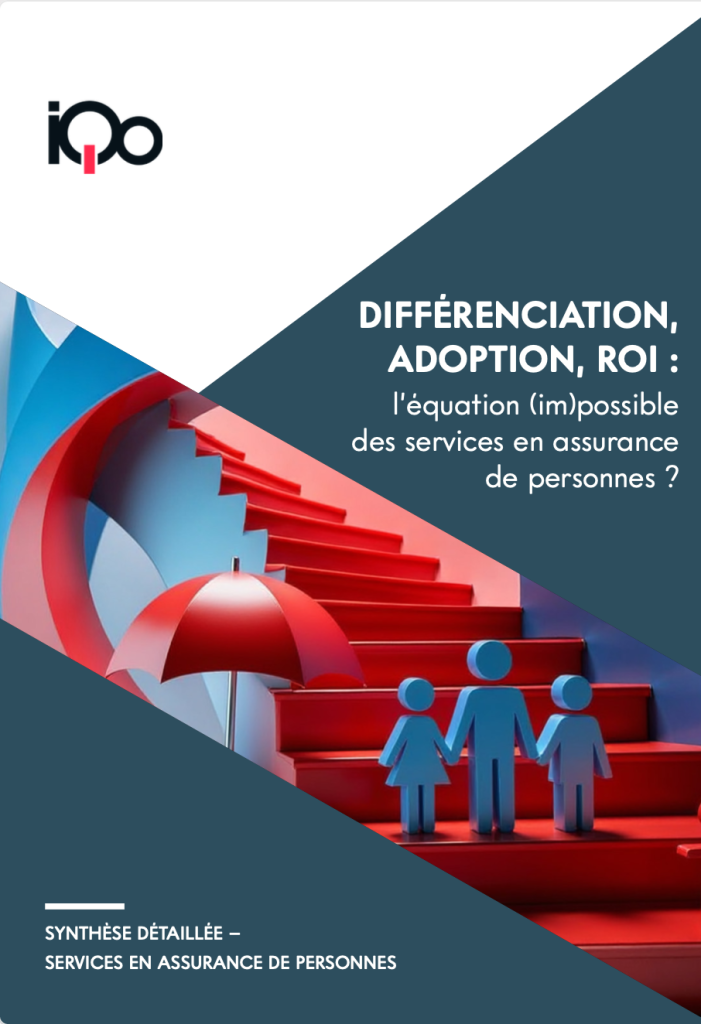

Personal Insurance Services: The New Strategic Lever in the Face of Market Standardization

For a long time, differentiation in personal insurance was based on coverage, reimbursement levels, and policy terms. Today, this model is losing steam. Policy offerings are becoming increasingly similar, comparison sites are proliferating, and policyholders are switching insurers more readily.

In this context, services are no longer merely an add-on. They have become a key strategic driver, capable of transforming the relationship with the policyholder, improving technical performance, and sustainably strengthening the value proposition.

customer experience insurance delegation management

Contents

1. A Life and Health Insurance Market Under Pressure

Personal insurance is operating in an increasingly challenging environment:

The ease of cancellation and the increased transparency of offers are driving greater customer churn. In this context, the product alone is no longer enough to build customer loyalty. Insurers must find new ways to differentiate themselves beyond price.

personal insurance services

Study: Personal Insurance Services

Check out our study on personal insurance services (Health, Life and Accident, Savings & Retirement). This study covers all market segments: individuals, microbusinesses, small and medium-sized businesses, large corporations, and professional sectors.

This summary presents the perspectives, priorities, and feedback from key market players on the following topics:

2. Why the product alone is no longer enough to set it apart

Whether it’s health insurance, life insurance, savings, or retirement planning, the differences between offerings are narrowing. Coverage options are becoming easier to understand, more comparable, and sometimes interchangeable.

Result:

In this context, differentiation can no longer be based solely on the terms of the contract. It must be reflected in the customer experience, going far beyond reimbursement.

3. Services: The New Core of the Insurance Value Proposition

These services are specifically designed to address this trend. They enable the insurer to remain a part of the insured’s life at every stage, even outside of traditional “insurance-related” moments.

Services as a Differentiation Tool

Teleconsultations, health guidance, preventive care services, psychological support, social assistance, retirement counseling… These services help create a tangible and visible promise that policyholders can understand.

When coverage is comparable, it's now the services that make the difference.

Customer Loyalty Tool

Well-integrated services encourage regular use and foster a sense of closeness. They reinforce the perception that the insurer is valuable and reduce the temptation to cancel the policy.

A policyholder who uses services perceives greater value in their policy, even in the absence of a claim. This perceived value is a key factor in fostering customer loyalty in the medium and long term.

Technical Performance Factor

Beyond the customer experience, services play an increasingly important role in reducing the claims rate :

By taking action early on, these services help reduce future costs and improve the technical balance of the portfolios.

Addressing CSR Challenges

Societal expectations are changing dramatically. Mental health, caregiving, inclusion, and support for vulnerable populations: these services enable insurers to fulfill their CSR commitments.

They bring a human and social dimension to the insurance promise, in line with the expectations of policyholders, businesses, and social partners.

consulting firm Procurement

Insurance

Learn about our expertise and case studies to help address the challenges facing the insurance industry.

4. A level of maturity now evident in all markets

Long confined to individual health, these services are now expanding across all segments. Our study highlights the growing maturity of industry players, who are now structuring their service offerings as a pillar in their own right, rather than merely as a marketing add-on.

Despite this momentum, one obstacle remains: viewing services as an optional “bonus.”
However, the most forward-thinking insurers have taken a major step forward: services are now integrated into the overall strategy, where they are managed, prioritized, and evaluated.

5. Toward a New Insurance Model

The main finding of our study is clear: services are redefining the personal insurance model.

They are shifting the insurer–policyholder relationship from a transactional model to a relational and service-oriented model. This transformation requires:

Services can no longer be treated as a secondary issue. They are becoming a key driver of competitiveness.

In an increasingly standardized market, services have become a key factor in survival and differentiation for life and health insurance providers.

They make it possible to create new value where the product reaches its limits, strengthen relationships with policyholders, and sustainably improve overall performance.

The question, therefore, is no longer whether to develop services, but how to structure, prioritize, and manage them effectively. This is precisely what is at stake in the sector’s next stages of transformation.

consulting firm Procurement

Insurance

Learn about our expertise and case studies to help address the challenges facing the insurance industry.

Frequently Asked Questions

Services have become indispensable as personal insurance offerings have become increasingly standardized. Coverage and pricing alone are no longer enough to differentiate providers. Services help create tangible perceived value, improve the policyholder experience, and strengthen customer loyalty, while contributing to technical performance and CSR commitments.

Policyholders primarily expect services that are useful, simple, and accessible when they need them. In health insurance, telemedicine, mental health support, and preventive care are highly sought after. In personal protection insurance, assistance and social support services are key. In savings and retirement planning, information, advice, and support at key life stages are crucial.

The profitability of services is not measured solely by direct monetization. Their ROI is primarily reflected in increased perceived value, reduced churn, improved NPS and, in some cases, reduced claims rates through prevention and support. The most mature players manage these services as a strategic investment rather than a cost center.

Conference

October 14, 2026 - Paris

Join us for our next conference, “
,” dedicated to the topic: Retirement Savings: Must We Choose Between Sovereignty and Competitiveness?